Should I Make a Video Podcast in 2026?
Video is optional in podcasting, and it's a door that's always open to you, even if you launch with audio-only. This guide is here to help you decide whether adding a video component suits your style and goals.


The Independent Podcast Report shows that 31% of creators publish full video versions of their episodes. Another 32% don't make video yet, but they're thinking about it.
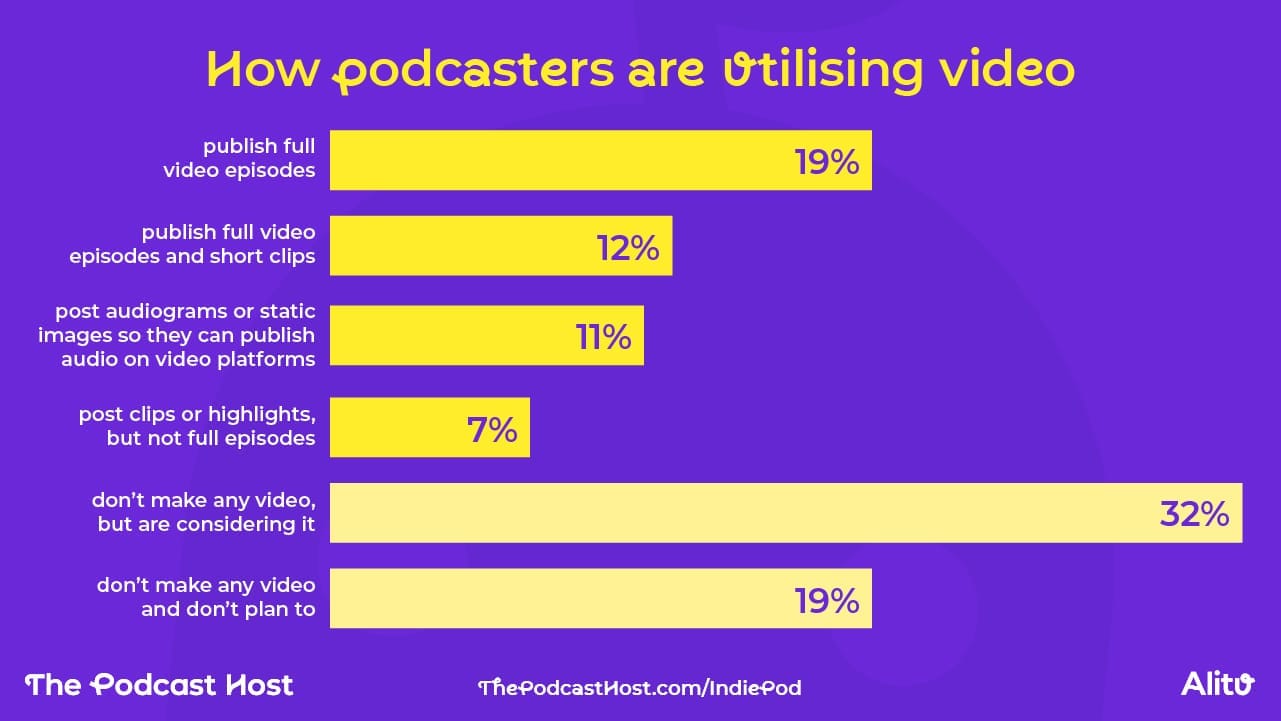
Video is optional in podcasting, and it's a door that's always open to you, even if you launch with audio-only. This guide is here to help you decide whether adding a video component suits your style and goals. Let's look at both the opportunities video offers and the reasons some creators choose to stick with audio.
The Case For Video Podcasts
One reason many podcasters add video is the hope of being discovered more easily. YouTube is a content search behemoth, and a strong presence there can help new fans find your show. Although you can upload audio without recording video, many creators believe that viewers respond better to real movement than to static images.
For businesses and brands, a YouTube channel and social media presence are pretty much the expectation these days. Producing good video costs money, but if you already invest in content marketing, it can be a worthwhile addition to your strategy.
There are practical advantages, too. Video doesn’t replace audio monetisation, but it does expand the possibilities. A presence on platforms like YouTube can unlock extra revenue, from built-in ad sharing to visual sponsorship formats and video-based membership perks.
There is an important caveat here. Research from Oxford Road and Podscribe shows that podcast ads served via YouTube are 18-25% less effective at driving purchases than audio podcast ads. In simple terms, advertisers tend to see lower conversion value from video impressions than from audio downloads.
That doesn't mean video lacks monetisation value. It suggests a difference in strength. Audio remains the stronger medium for trust and direct response, while video performs better for discovery, awareness, and brand building. For most creators, the most sustainable approach is to treat video as a complement to audio, not a replacement.
Video can also improve accessibility. Captions and visual context help folks who prefer to watch or read along, and they broaden the range of people who can engage with your work.
Finally, video offers more granular engagement data. YouTube and other platforms provide clear information about what viewers respond to and where their attention drops. These insights can help you refine your content more precisely than audio metrics alone.
Used well, video can complement your podcast and widen its reach, even though audio is still the primary way most people choose to consume podcasts.
The Case For Audio-Only Podcasts
So video can bring a lot of additional advantages and opportunities. But why might you want to leave the camera off and stick to audio-only right now?
If you are a hobbyist with limited time or technical experience, adding video from day one can make the process harder than it needs to be.
You can always add it in later once you find your feet with consistently creating great audio content. And you can still get your show on YouTube with static image or audiogram episodes.
Audiences also have far more chances to hear a podcast than to watch one. When people are moving through their day, audio competes with other audio. When they sit in front of a screen, your competition becomes film, television, gaming, and every social media app on their phone.
This is why even video-heavy shows still see most of their consumption come through listening, not watching. For example, the 2025 Podcast Landscape Study from Sounds Profitable found that 40% of podcast listeners use YouTube as their main app, but almost half of that group listens to most of their shows without watching the video.
Other research tells a similar story. The Podcast Download report from Cumulus Media and Signal Hill Insights shows that 92% of people still describe themselves as podcast listeners. More than half of those who watch on YouTube also listen on other platforms, and only 8% watch and never listen.
The pattern is clear. Video can help people discover your show, but audio remains the way most podcasting is actually consumed. If you choose to do video, always keep in mind that it still needs to make sense with your eyes closed.
There are some more practical considerations, too. Will video take more time? What will its impact be on your workflow? And will it cost more?
Will Video Podcasting Cost More Money?
Data from the Independent Podcast Report showed that almost half of audio-only respondents spent between $10 and $49 per month running their show, compared to 29% of the video podcasters.
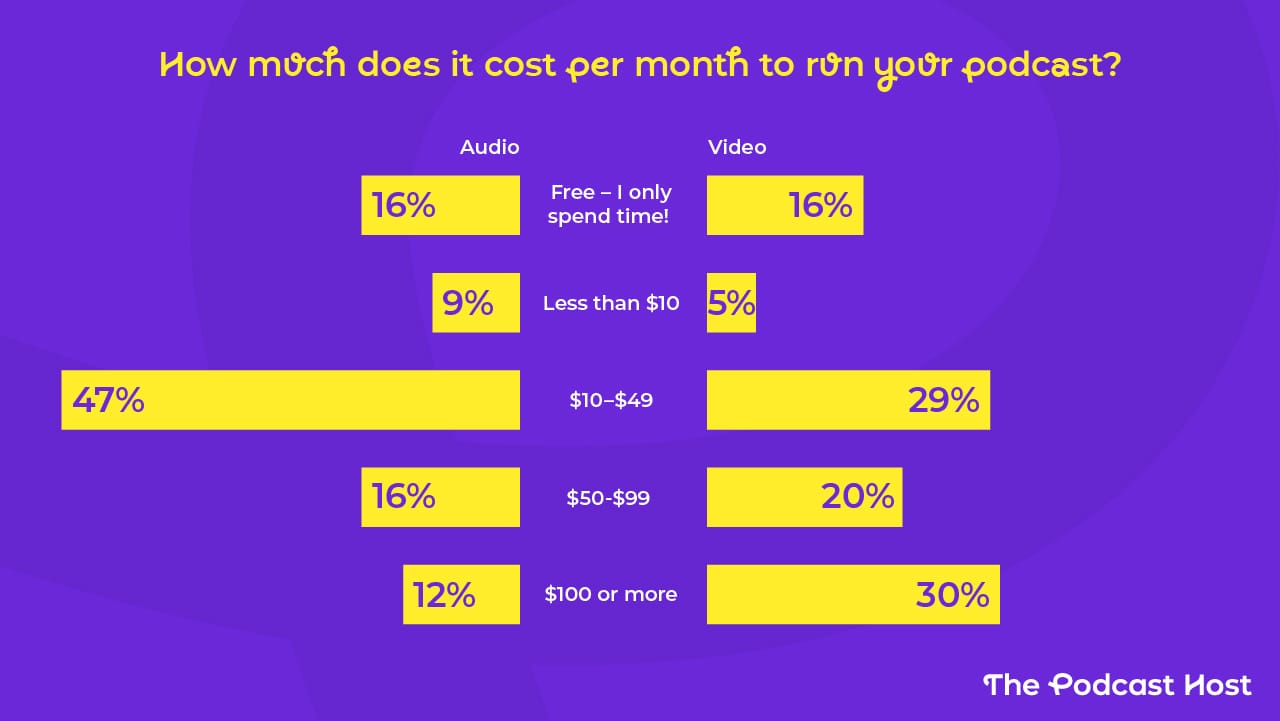
Video creators tend to spend more on their shows. About 30% pay $100 or more each month, compared with only 12% of audio podcasters. For independent creators, this is a useful reality check.
For those adding visuals, format will dictate cost. A simple video chat show with a rotating guest can cost far less to produce than a scripted documentary, an educational series, or an immersive fiction podcast.
Will Video Podcasting Take More Time?
Most indie video and audio-only podcasters take 1-5 hours creating each episode.
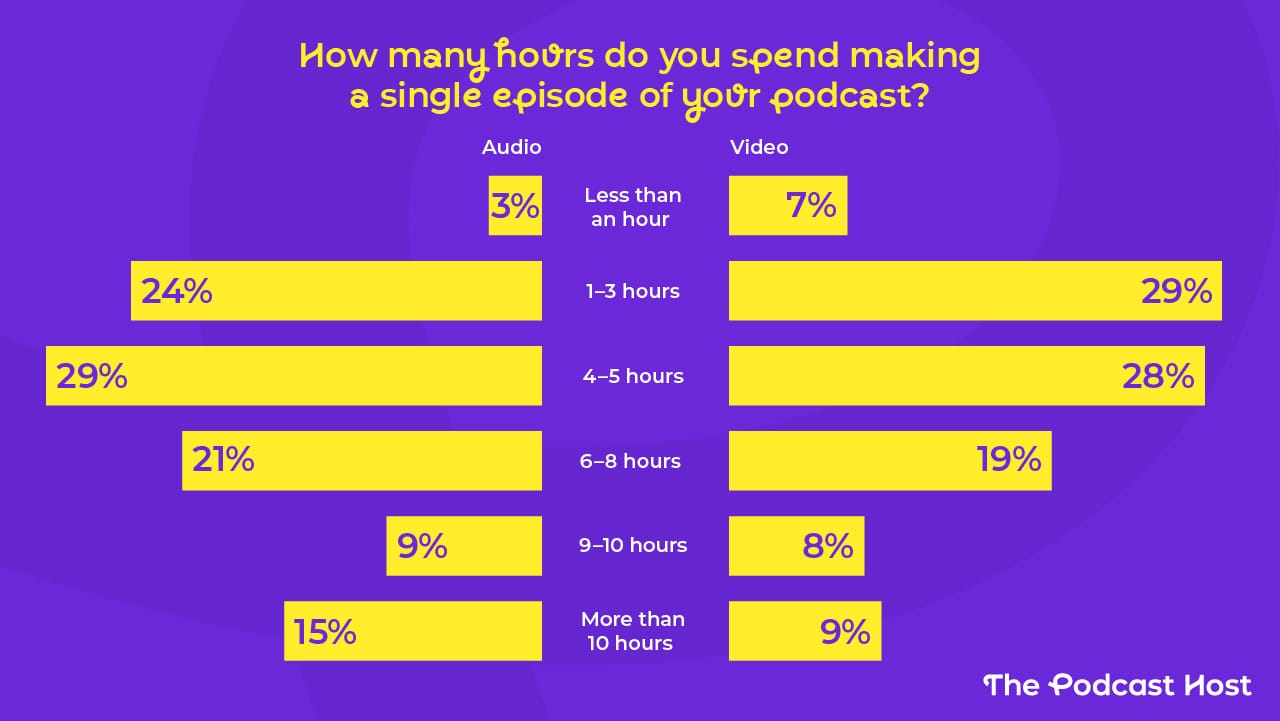
But, it's the audio-only creators who're more likely to spend over ten hours on their latest piece of content. This might represent the work that goes into the type of shows mentioned in the last section, from scripted documentaries to fully cast and soundscaped fiction podcasts.
By contrast, many video-creating indies follow a fast "top, tail, publish" approach to post-production. This is especially common for folks running interview chat shows with two talking heads recorded on Alitu, Zoom, or Riverside.
Ultimately, there's no "right" or "best" approach here. They're just different. But we're starting to see how the time and cost nuance of video vs. audio podcasts can also affect things like show format and release frequency.
Will Video Podcasting Impact My Format & Schedule?
Video podcasters are much more likely to run chat-style shows. That isn't just true for the indies, where 40% do interviews compared to 25% of audio-only creators, but big networks and brands can keep costs down and increase output by following this format, too.
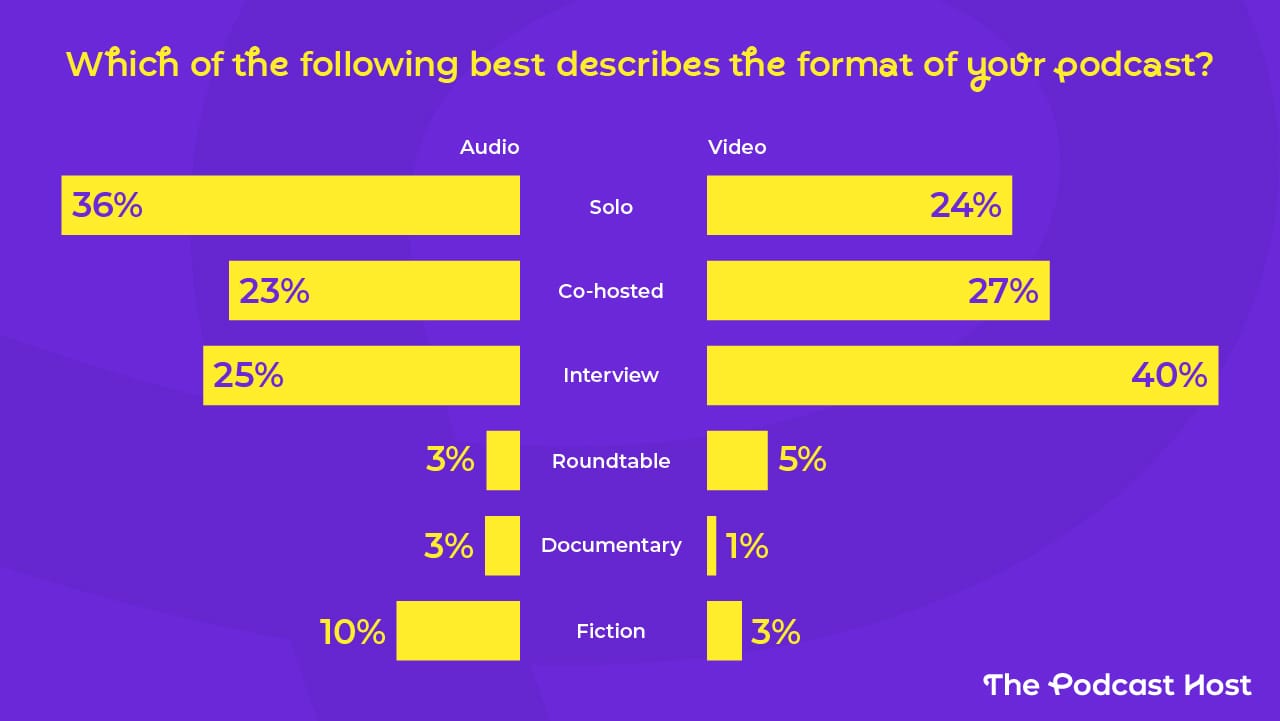
Video podcasters are also more likely to hit a weekly release schedule, and less likely to have no regular release schedule. There could be more to this than minimalist production workflows. The desire to "feed" algorithms could be a factor here, too.
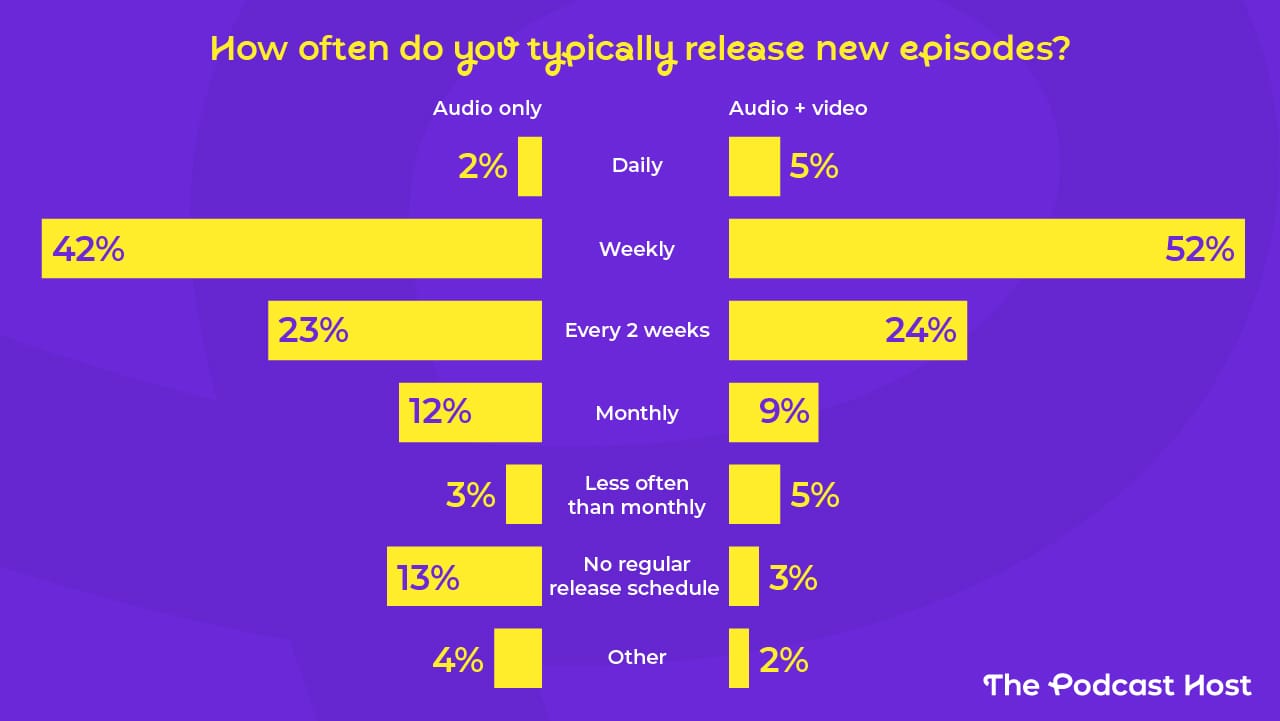
Video often feels as if it demands constant output, because channels on YouTube and social platforms can lose momentum when uploads slow down. Podcast apps work differently. Subscribers will still see your new episodes in their feeds even if you take long breaks or publish irregularly.
So... SHOULD I Make a Video Podcast?
It would be brilliant to offer you a definitive yes or no answer, but such things rarely exist in podcasting. Don't skim this summary without the added context of everything above, but here are some key takeaways:
No. Focus on audio for now if…
You are working to a tight budget
Audio is still the cheapest way to publish consistently. Most indie podcasters operate in the $10 to $49 per month range, which makes testing ideas and building confidence far less risky.
You cannot commit to frequent or predictable publishing
Audio is more forgiving. You are less likely to lose momentum if life intervenes or you need to publish irregularly.
Your show relies on depth, scripting, or sound design
Narrative, documentary, or heavily produced formats often gain little from cameras unless you are willing to increase workload or spend significantly.
You want to find your voice before adding complexity
Starting with audio lets you refine your format, rhythm, and audience first. Video can always be added later if it genuinely improves the show.
You’re not actually motivated by video
If video feels like something you should do rather than something you want to do, it’s unlikely you’ll stick with it long enough to matter.
Yes. Video could make sense if…
You already publish content for a brand or business
If regular content creation is already part of your work, video can become an extension rather than an extra burden.
You want access to additional monetisation routes
Video enables visual sponsorships, platform ad revenue, and integrations that audio alone cannot offer.
You want clearer signals about engagement
Video platforms provide more visible feedback on what holds attention and what loses it.
You want to reach people who prefer watching or reading captions
Some audiences engage more easily with video, and captions can improve accessibility.
Your format is simple and repeatable
Interview or conversational shows are easier to scale on video and tend to perform well on YouTube and social platforms.
No Matter Which Path You Choose...
Alitu helps you record, edit, and publish your podcast without getting buried in tech. The team has spent years stripping away friction so you can focus on making a good show, not wrestling with software. What started with audio now extends to video, using the same simple, practical approach.
There is no prescribed format and no pressure to podcast a certain way. Alitu helps you decide what fits your goals, then gives you the tools to do it well. You can try Alitu free for seven days and see how straightforward podcasting can be!
