How to Create Podcasts, Blogs, and Videos People Actually Share in 2026
AI has flattened the playing field. Anyone can produce “smart” content on demand. The real advantage now isn’t knowledge or speed. It’s understanding what makes humans stop scrolling and start sharing.


Information isn’t the problem anymore. Attention is.
In 2026, content is instant. Anyone can spin up a post, an episode, or a video in minutes. Most of it disappears without a trace.
What spreads isn't volume; it's relevance. Something that makes a person stop, feel understood, and think, “I know someone who needs this.”
The creators who win aren't the loudest or the fastest. They're the ones who give people a reason to care enough to pass the work on.
Here are six ways to shape your ideas into stand-alone pieces that respect attention, support your audience, and help your podcast travel further.
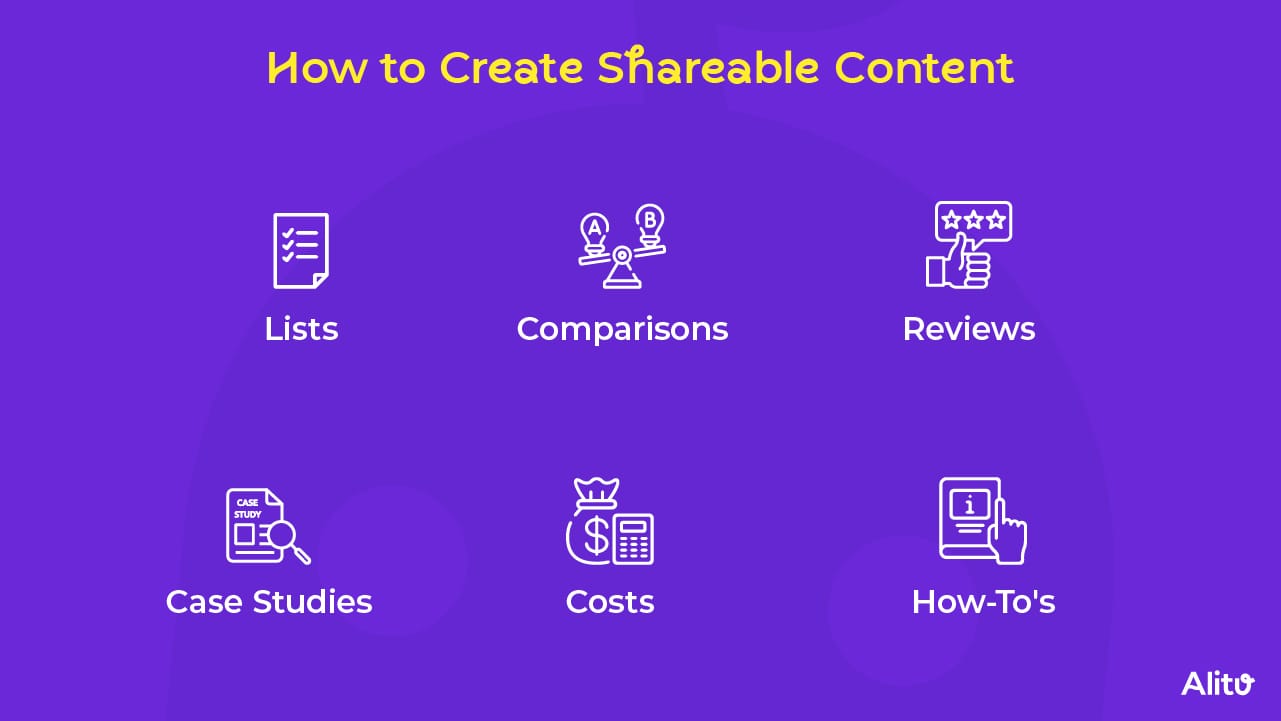
They’re inspired by Marcus Sheridan’s Big Five, with a few adjustments for a world where perspective matters more than raw information.
#1 Lists
Once, lists like “the best _____ of 2015” offered many options. Today, lists like these are overwhelming instead of helpful. When you minimize choices to solve your audience’s problems, your podcast’s shareable content filters out extraneous options. This makes space to highlight your favorites and provide context for the audience.
Let’s say you make a podcast for content creators who work from home, and you have an episode about choosing the right coffee mug for work sessions.
For example, your shareable content could show:
- Five Mugs That Make Your Morning Coffee More Satisfying
- Three Reasons Your Coffee is Disappointing (Hint: It’s The Mug)
- My Three Favorite Coffee Mugs for Working From Home, and Two to Avoid
Keep these lists short. A common rule of thumb is that the number of objects an average person can hold in short-term memory is seven, plus or minus two.
Instead of your podcast’s list being an all-you-can-eat buffet, it’s a menu. You bring your perspective and expertise to show the audience why choosing a particular coffee mug will make them feel good.
#2 Comparisons
Comparing one thing to another, with the pros and cons of each, reminds me of English Lit exam questions. “Compare and contrast To Kill a Mockingbird with Romeo and Juliet. Show how each novel’s characters succeed or fail.” Without context, though, no shareable content really matters.
Meaningful comparison posts show your audience:
- Which choice matters today
- Who each choice is good for
- How to evaluate those choices
Start with the use case and circumstances. “I need a new coffee mug that’s spill-proof and insulated for long work sessions, with a fidget-satisfying texture. The mug has to be microwave-safe, dishwasher-safe, and won’t break if it falls off my desk.”
Now that you’ve established the conditions, comparing two coffee mugs isn’t two descriptions of features and deficits; it’s about how each mug fits the need you described. You’re showing the audience how to choose between the two based on their personal needs, drawing on information from the work-from-home podcast.
#3 Reviews
We’ve been conditioned to consider reviews as either “good” or “bad.” Nobody wants to be judgmental or disingenuous.
But when you add context and experience to a review, you don't have to worry about “good vs. bad.” Instead, show us how the thing you’re reviewing fits into the world, who it’s for, and why this is important.
Use your lived experience with the product or service to describe how it worked for you. Authenticity always matters more than neutrality.
For example:
- “The blue mug is microwave safe, and when I took it out of the oven, the handle didn’t overheat.”
- “My pour-over coffee funnel fits perfectly in this mug.”
- “The lid on this mug snaps closed with four locks, but it leaked anyway.”
Your review isn’t just a description. It’s not a sales pitch or an insult. Your review demonstrates the need to be filled, how this product or service meets that need, and your expertise. That’s valuable and worth sharing.
#4 Case Studies
Stories are only shareable when they offer more than inspiration. As Andréa Jones, host of The Mindful Marketing Podcast, puts it, the goal is not to broadcast more information, but to filter and contextualise it into something digestible.
A case study becomes useful when you move beyond “I worked hard” and focus on decisions. What choices were made? Why were they made? What changed as a result?
For example, the business manager of a regional theatre company I once worked for didn't set out to work in the arts. While studying for an MBA, he relaxed by juggling on campus. A professor invited him to teach her students. That small decision pulled him into the theatre community, where his financial skills turned out to be unusually valuable. He changed direction, not through ambition, but through curiosity and context.
The lesson is not the outcome. It is the path.
When sharing case studies on your podcast or in clips, extract what your audience can recognise and reuse. Highlight the decisions, the constraints, and the moments that shifted direction. Add a short “what to try next” so people leave with an idea, not an assignment.
Do that, and you are no longer sharing a story. You are sharing a toolkit.
#5 Costs
Quoting prices online is fragile. Prices change, platforms update, and AI can list raw numbers faster than you ever will. Competing on up-to-date pricing is a losing game.
What lasts longer is helping people think about value.
Instead of listing prices, give your audience a way to judge return on investment. If a tool saves hours, reduces friction, or improves focus, its value is not the sticker price. It is what it replaces.
For podcasters, that might mean comparing a single, more expensive hosting platform with the time and effort of stitching together several cheaper tools. For remote workers, it might mean weighing the cost of a quieter appliance against the lost concentration of a noisy one.
The price matters less than the decision behind it. Teaching people how to prioritise spending is far more useful than telling them what something costs today.
#6 How-To: Contextualised Guidance & Adaptive Playbooks
If the internet were a magazine, tutorials would be the staples holding it together. But the most useful ones don’t just list steps. They apply judgment. When you show which steps actually matter, how to adapt them, and why they work differently now than they once did, you move beyond an instruction manual. That’s where your experience shows, and where the audience gets real value from your voice and perspective.
Recently, I wrote an article about OpusClip, and testing the software wasn't going well. I left my desk to walk the dog and eat lunch, and thought, if I’d completed step 10 first, I’d have been much happier with the outcome of steps 1-9. Then I realized, that’s it, that’s the hook of the article.
“Don't be tempted to take step 1 first, even though it’s right there in the middle of the screen and looks so simple. Instead, click over here in the toolbar and set up the brand template first.”
Now the article isn't about “How to Use OpusClip,” but “How I Got More Predictable Results Out Of OpusClip.” Implicit in that title is, “and so can you.”
When you create a tutorial for your shareable content, include the outdated advice that’s still circulated. Explain how your test proves or disproves it. If someone uses outdated advice as a search term, your tutorial guides them to a corrected course. Mention what’s changed, common mistakes, and real-world scenarios. If you encounter a physical obstacle that requires special handling, mention it. Your adaptation of a method helps someone else understand the process differently.
People use Internet tutorials for technique and relevance. They want to learn from someone else’s mistakes. And, again, they want to know what matters most, right now.
What Makes Content Shareable Now?
Content people take seriously and choose to share doesn’t need to be a hot take or a trend grab. What matters is whether it makes life easier for the listener, reader, or viewer. When your voice reduces cognitive load, respects attention, filters out the noise, and helps people feel understood, sharing becomes a natural response rather than an obligation.
Imagine tuning a radio. By filtering out the noise and clarifying the signal, you aren't making noise at the audience; you’re helping them focus their attention and effort.
You’re not a machine, cranking out more content; you’re exercising judgment, so they’ll practice the same. Before you click “publish,” ask yourself, “What does this do for the person who receives it?”
Your podcast already has valuable ideas. Use your experience, context, judgment, and sense of humor to present them. Those are unreplicable by any machine, and yours to replenish and share.
In The Podcraft Academy, we help podcasters shape their ideas so listeners can quickly grasp what matters and why. We're not just there to feed you more information, either. The Academy is built around feedback, accountability, and execution. We'd love to work with you in there!
