What is a Podcast in 2026? Can My Cat Be a Podcast?
As more kinds of media are called podcasts, the definition can start to feel blurry, and it helps to know what actually defines one.


What actually makes something a podcast? And yes, could your cat technically be one?
As podcasting has grown, the word “podcast” has stretched to cover audio, video, hybrids, and even newsletters. The label now feels loose enough to fit almost anything.
Here’s the practical definition. A podcast is not defined by the platform that hosts it. It’s defined by subscription, episodic release, and RSS delivery, which give listeners choice and creators portability.
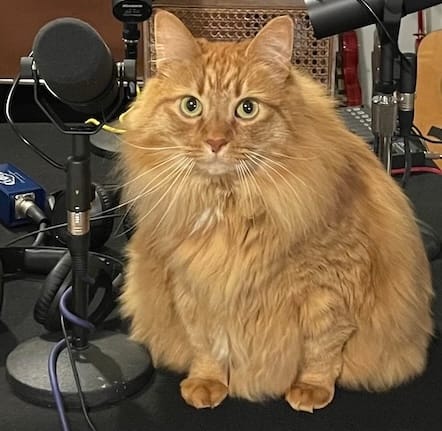
Ultimately, you're free to call anything a podcast. You could call your cat a podcast.
But if your cat can't be found in Apple Podcasts, Overcast, or Podcast Addict, people will reasonably question the label.
That doesn't make your cat inferior. It just means she probably isn't a podcast.
Let me unpack how that works in practice for you.
What People Usually Mean When They Say “Podcast”
When people call something a podcast, they mean a voice (or voices) they revisit. The episodes are released over time, and consuming them fits into daily life.
People experience it while exercising, traveling, working, or resting. As Podnews editor James Cridland puts it, “it’s something for the ears when your eyes are busy” The programming provides a sense of continuity and community; podcasts are more than just a file format.
The Listener Behavior That Defines Podcasting
When I was little, my grandmother bought me a subscription to Humpty Dumpty magazine. I didn’t have to remember to look for it or decide whether to pick it up; it arrived because I’d already chosen it.
Podcasts work the same way. You don’t have to check for new episodes, and they don’t get crowded out by an algorithm. Once you subscribe, new episodes arrive automatically in your listening app and wait for you.
Even better, you get to choose the app, the pace, when to listen, and how. The audience is in control. This behavior matters more than the platform holding it or the medium it uses.
The Technical Definition, Simplified
A podcast is episodic audio, or audio with video, delivered via RSS so listeners can subscribe and receive new episodes automatically.
When we asked podcasters if RSS is essential to their craft, 67% of respondents said yes. Others said no, and a few didn’t know what an RSS feed is. But the good news is, you don’t have to think about RSS for it to shape your options.
Think of RSS as a behind-the-scenes stagehand, routing new podcast episodes from your hosting service to listening apps.
You publish once, for example, through Alitu, and your episode appears automatically across a wide range of podcast apps, including many you may never have heard of.
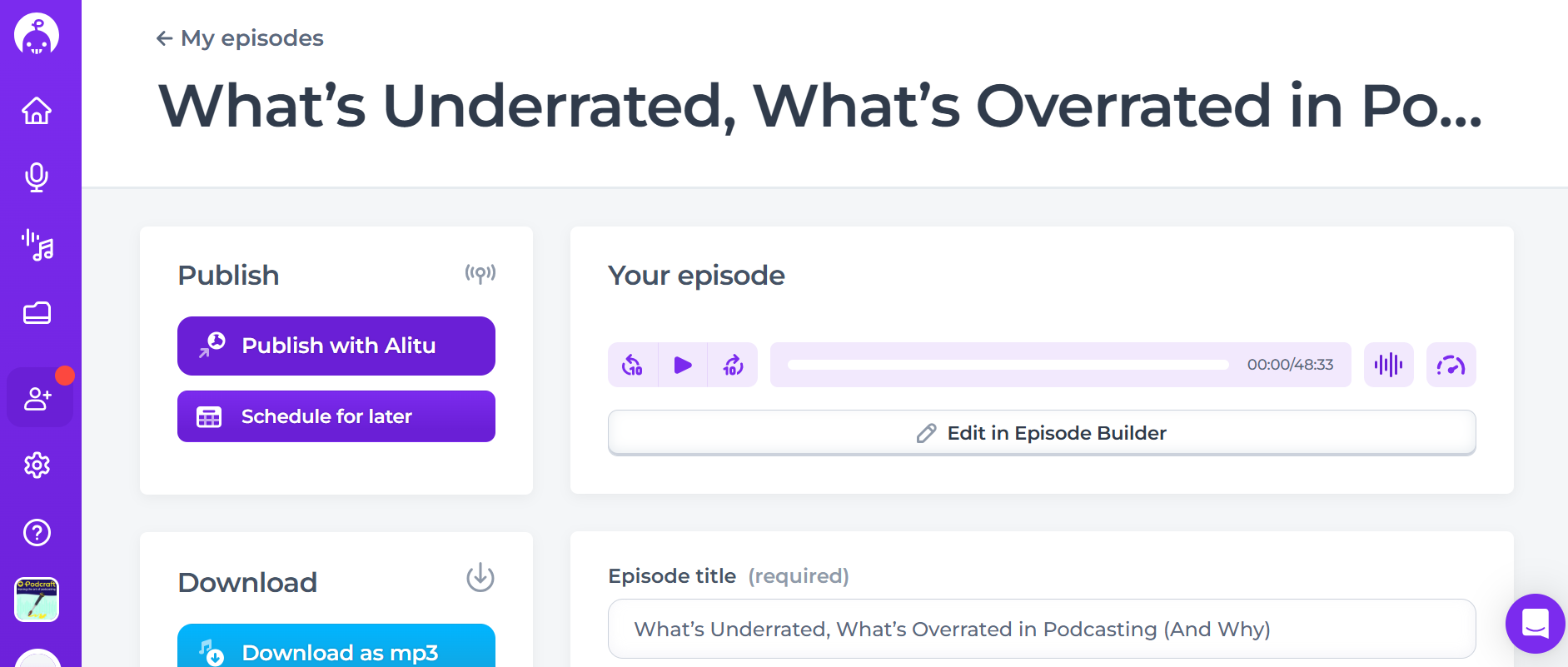
This open, standardized process gives creators and audiences informed choice. You aren’t locked into one platform, and your audience can find new episodes in the app they prefer.
As the phrase goes, you can experience it “wherever you get your podcasts.”
Check out the many apps and directories where you can find the above episode.
Why So Many Platforms Call Their Content “Podcasts”
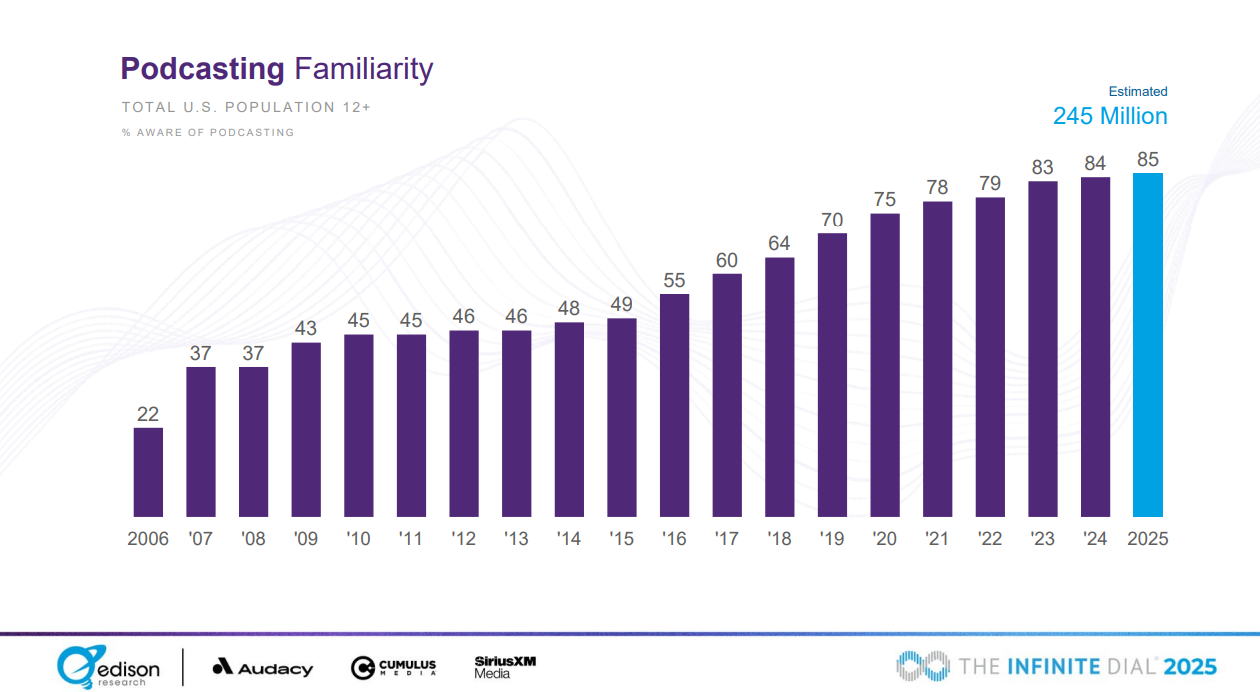
When I first started podcasting, Edison Media’s Infinite Dial survey found that less than half of the U.S. population knew what a podcast was.
Today, that number has grown to 85%.
“Podcast” has become shorthand for conversational, recurring media. As a result, digital content platforms use the word because it's familiar.
Does this mean some creators are wrong, or audiences are gullible? No. But it does mean the differences between platform-bound media (such as YouTube or TikTok videos, or Meta’s Reels) are vague, particularly when we talk about portable, recurring media.
Why RSS Matters and What It Protects
Ultimately, RSS protects choice and flexibility.
For audiences, RSS lets them choose how they listen or watch. If they switch apps, they won’t lose access to the shows they’ve subscribed to.
For creators, RSS means ownership. You control your feed and where it’s distributed.
RSS isn’t a monolith, either. New developments in RSS technology improve metadata and accessibility. These improvements help podcasters to grow their shows and audiences to enjoy them. And, RSS preserves the open system that makes podcasting flexible.
Reputable podcast hosting providers don't lock you into their platform or claim ownership of your RSS feed. That feed belongs to you, which means your audience remains portable.
If you decide to move from one host to another, the support teams on both sides can help manage the transition so your subscribers continue receiving new episodes without interruption. In most cases, listeners won't even notice a change.
Podcasting Solved a Distribution Problem
Podcasting emerged to solve a file-sharing problem, specifically, music sharing.
In the 1990’s, internet constraints made manual downloads impractical. But RSS enclosures automate the delivery of large audio files, streamlining the process.
Podcasting didn’t appear fully formed; it was assembled by people solving a real need. When the place where you get music, stories, and discourse lacks variety, you have to build new ways of connecting ideas to audiences.
Is My Favorite Show a Podcast?
Since RSS runs in the background, and a program can include audio, video, text, and images, it can be hard to tell if a particular creation is a podcast or not. Let’s peek behind the velvet curtain.
Video Podcasts
Some podcasts use RSS to share video episodes, which some listening apps can play without changing how the podcast works. Apple Podcasts and Podcast Addict support video delivered via podcast RSS feeds. Spotify supports video episodes uploaded directly to its platform, but those videos are only available on Spotify.
YouTube
YouTube functions as a "pull" platform in the podcast ecosystem. It can ingest an open podcast RSS feed and make that show available inside YouTube.
However, YouTube isn't a "push" platform. It doesn't generate a podcast-compliant RSS feed that can be sent out to podcast apps like Apple Podcasts or Spotify.
In other words, YouTube can import a podcast, but it can't export one.
TikTok
Despite iHeartMedia and TikTok’s partnership announcement, TikTok doesn’t offer RSS feeds for distributing creator content. A TikTok series is a video series: it’s not superior or inferior, but different.
Any RSS feeds that deliver TikTok content are third-party RSS feeds generated from TikTok accounts, not by TikTok itself.
Substack
A newsletter platform like Substack may include a podcast if it publishes audio via an RSS feed, but a newsletter with audio and/or video isn’t a podcast by default.
Substack newsletters have RSS feeds for posts by default, whether or not they include audio or video.
If a Substack author publishes audio posts, Substack can generate an RSS feed compatible with podcast apps. Those audio posts can function as a podcast. But, Substack’s monetization model keeps their subscriptions within the app and email newsletter. Sharing the podcast RSS feed elsewhere doesn't help Substack authors' earnings, so they're unlikely to do so.
How to Tell Whether Something Is a Podcast
If you find yourself forced to define “podcast” in a pub quiz or an argument with strangers on the Internet, here's the simplest possible test.
Can someone subscribe to this and receive future episodes automatically, no matter the platform?
- If the answer is yes, then it’s a podcast.
- If the answer is no, it’s media in a different format.
That media is still meaningful and valuable, yet different from a podcast.
Defining a Podcast Isn’t About Exclusion
Nobody is “doing it wrong” by publishing audio or video online. When you know what RSS feeds are and how they work, you have more options for distributing your podcast and engaging audiences. This empowers you to:
- Choose tools deliberately (such as software and platforms)
- Protect your work’s portability
- Plan for the long term (choosing time-tested and growing infrastructure, not the flavor of the month).
A podcast isn’t defined by vibes, gear, or popularity. It’s defined by episodic structure, subscription model, and audience choice.
Best of all, podcasts aren't excluded from platforms such as YouTube, TikTok, or Substack. You can promote a podcast anywhere: the podcast itself lives outside any single platform. If one goes down, your podcast is untouched.
Defined by Delivery, Not Platform
Some years ago, I interviewed Adam Curry about the history of podcasts. Curry and I both lived through the frustration borne out of the Telecommunications Act of 1996, and how finding music outside the Billboard Top 10 was nearly impossible.
The need to share audio freely and sustainably gave birth to RSS, and hence, the podcast.
The desire for original, independent music and stories never goes away. Today, we need to share information based on lived experience more than ever. It doesn’t matter whether that takes the form of video, audio, discussion, music, or narrative.
Ultimately, a podcast is media saved and distributed so that creators own their work and audiences can experience it on their own terms.
If all of this sounds important, but confusing, that’s where the right tools matter. Podcast hosting platforms like Alitu handle RSS delivery behind the scenes, so you can focus on making episodes instead of managing infrastructure. You still own your feed, your distribution stays portable, and your audience can listen wherever they choose, without you having to think about RSS every time you publish.
